Gratitude. Gratitude is the reason I signed up for my first Spartan UltraBeast in Lebec, California for October 2019. I had raced at a Trifecta level for the last several years earning 1, 2 and a hat trick of 3 trifectas at the Sprint, Super and Beast distances. But I’d never done an Ultra. And culturally there is currently so much chatter out there about joining the “Ultra club” that I will admit that type of idea intrigued me. But, if you’ve ever run a Beast race you know that a Spartan Ultra isn’t what most people would imagine a “regular Ultra” to be. It’s much, much worse.
Running a 50K on the road is one thing. Running a 50K on the trails and in the mountains is entirely a different thing. And a Spartan Ultra is simply an insane thing. So where do you even begin? I think my journey might help a lot of people interested in dipping their toe into this particular pond. But the process starts and ends with gratitude.
The first question to ask yourself is simple. Are you sure you even want to do this? Ensuring that the motivation isn’t an externally derived one due to your circle on social media, or around the water cooler, or around the Thanksgiving table for one-upmanship points against cousin Dan the insufferable marathonist seems a no-brainer but for some it may not be. It has to be personal and internally motivated.
Is it a simple mathematical expansion of your training? I used to do X and that’s no longer difficult so now it’s on to Y? Is it a reach after a personal injury that you’ve overcome? Is it to prove to yourself that you’re the next David Goggins? Or is it more basic than that? Mine was gratitude. Gratitude towards my wife and 3 kids. Gratitude towards my health and wellness. And Gratitude that I was a complete mess before I started doing Spartan races and engaging in the OCR lifestyle to the point that it literally saved me from a nasty downward spiral that threatened to end me.
Exhibit A: Holy Avocado Picking Shit look at this guy!!!
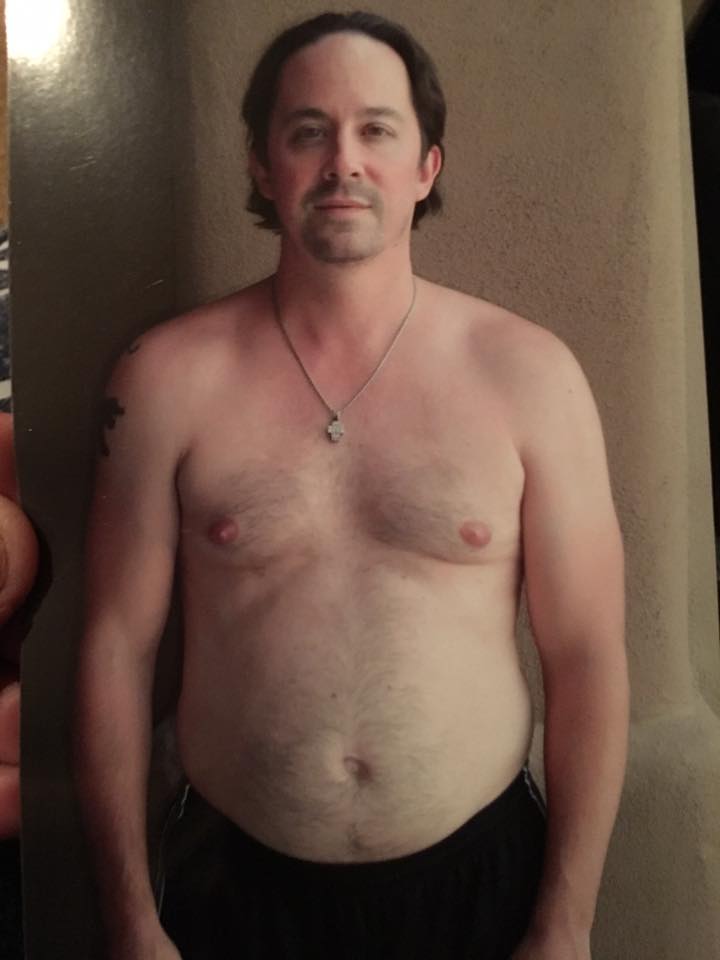
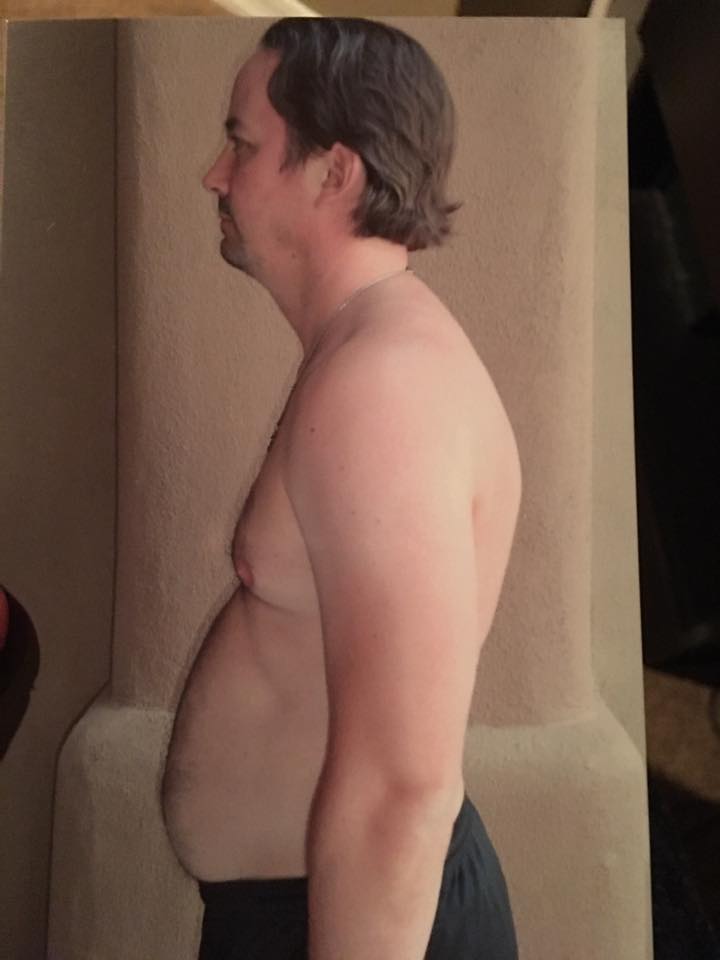
That was me in about 2013. Blech. Someone kill that guy with fire. Drinking too much. Eating crap. Barely any exercise. Just a sack of garbage.
Exhibit B: Day after Lebec UltraBeast. Now we’re talking.
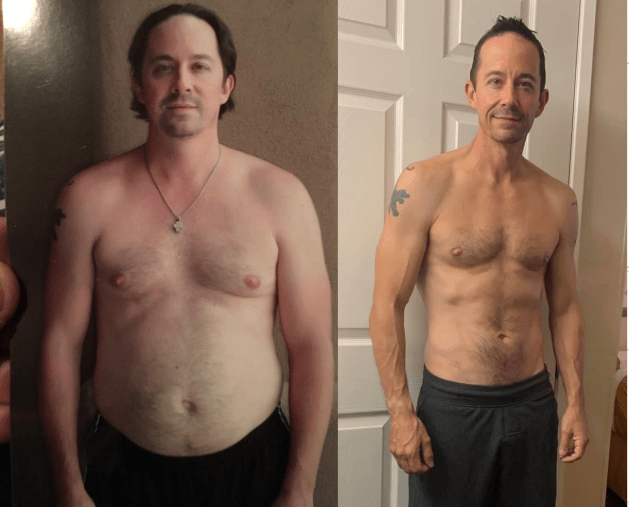

But that’s just the simple physical change. Anyone who engages in this sport, this lifestyle and certainly the UltraBeast level challenge…..knows…..really knows….that 90% of it is all mental. Mental discipline, fortitude and perseverance are immensely important. Anyone can be coached into training physically. But you’ll also need to steel your mind for the experience. So again…why do you even want to do this?
“What is living my best life? For $400 Alex”. Ok. So we answered the vitally important starter gate Jeopardy question. Now to get on to what everyone really cares about. How the fuck do I get this thing done? Walk me through it like my kid does watching youtube videos to finish that tough level on Lego Batman. I have a solid base of training (I think), my diet is on point (maybe), and I’m cross-training for obstacles (someone swears I’m good). That’s all I need right? Just do more of all those things? The short answer is sort of. But let’s break it down by category.
DISTANCE TRAINING
One of the greatest resources I’ve encountered in the last few years of training is this book:
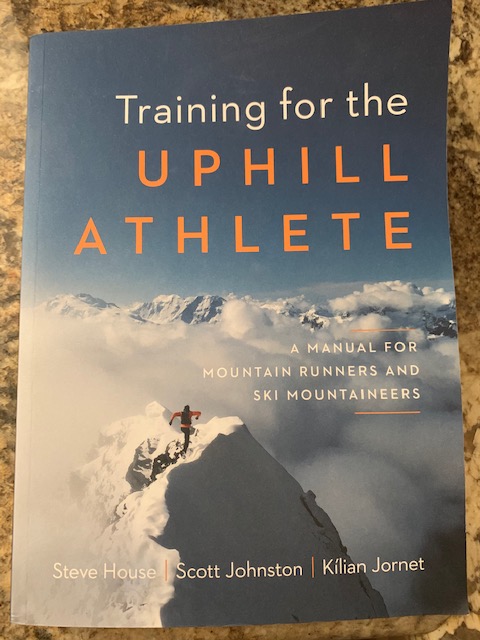
The information and guidance concerning AeBT (Aerobic Base Training) was invaluable. My understanding of this concept was so woefully ignorant.
– How do you train for long tough races? Run really fast and far up the mountains!! Am I right? No. You’re an idiot.
– But is my heart in the right place? Also no. In fact, it might actually explode like confetti tossed in a parade.
Endurance training is completely governed by your aerobic base. The concept is that you need to train into being able to run longer and farther up ever increasingly difficult terrain. Seems simple, right? But it isn’t. The gnarly language of some trainers comes into play and then someone tosses out the phrase “lactate threshold” which is a setting on your watch you ignore like you did good dating advice in your 20’s. The concept is that you can run longer and farther based on your HR base training. Keep your HR down longer you can go FARTHER. Keep your time prior to entering a lactate riddled breakdown longer and you can also go FURTHER.
Therefore:
1. You must slowly build your ability to run farther with a lower HR longer
2. Running farther with a lower HR delays entering a moment where your lactate builds up thus preventing you from going any further due to muscle fatigue.
3. Therefore, train longer and slower and you will delay lactate buildup longer thus guaranteeing a better race that feels less effort filled. It will also allow you to push when others simply cannot.
This graphic showcases the difference in energy production and utilization for an athlete with a solid AeBT vs one that is deficient.
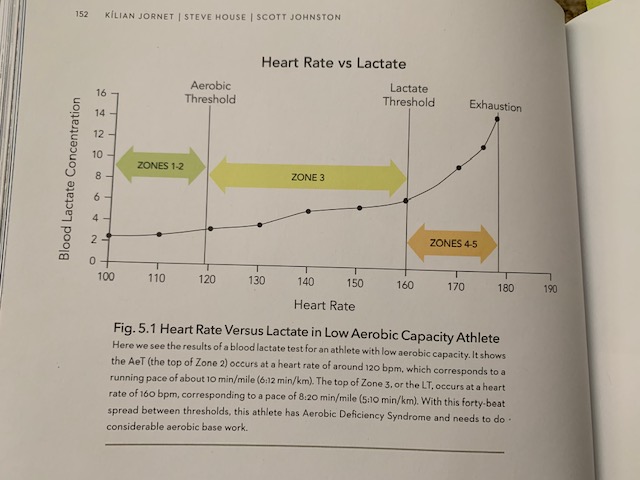
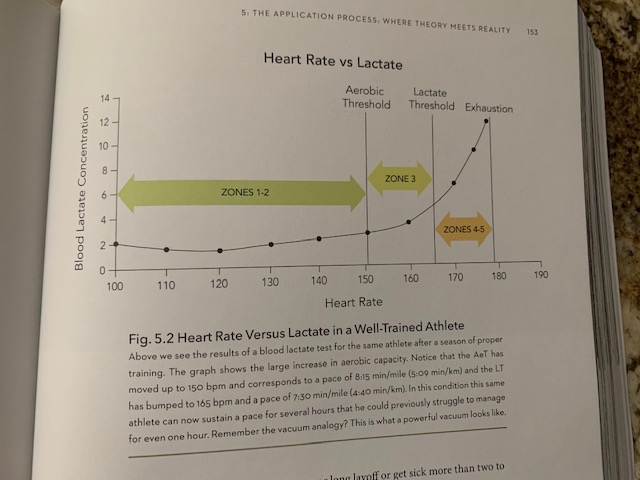
See the difference? It’s the ability to push when during the race your heart rate skyrockets. It’s not just that your Lactate threshold has moved from 160BPM to 165BPM. That is sort of negligible. It’s that you spend very little time in your Zone 3 prior to that point….you coast in 1 and 2 for most of the race until you don’t…..but it allows you to push longer and farther prior to the shit hitting the fan. That first graphic is most beginners. They work harder and harder and harder and sort of predictably hit the wall. The second graphic showcases someone in great status being able to coast in Zone 1 and 2 for far longer at higher HR levels.
**A solid AeBT garners you probably a full lap of the Ultra and then some before it becomes an issue. And honestly, by then, you’re mentally almost done with the race anyway by mile 22 or so.
Elite athletes deal with this all the time. But Us mere mortals really need to pay attention. The generic rule is firm. You can increase your endurance distance 10% in a given season or during base training. There are no real shortcuts. Long slow base runs will build this. We all hate long slow runs. We want to go FAST. And PR!! And tell our buddies they are lazy sacks of shit and to keep up!!! But you’ll be doing these long slow base runs after reading this or you’ll suffer horribly and likely DNF. You do NOT want to DNF.
So if you’re contemplating a Super. You’ll need to be able to nail down that 5 mile Sprint distance so that you can push on race day for an 8 miler. Want to do a Beast? Better make sure 8 miles doesn’t feel like death because 13 in the mountains with 25+ obstacles might end you. And if you’re plotting the Ultra …. Well….20 miles better not freak you out. Your AeBT is the key to unlocking that particular vault. I don’t have some perfect training algorithm for ramping up and tapering down. But I did pay attention to this concept for a 50K training race out of Uphill Athlete shown here:
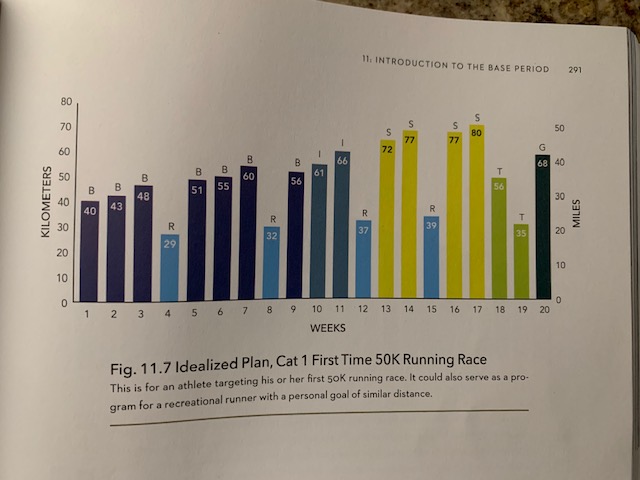

Right. I get it. I think for a lot of athletes this schedule is probably pretty amazingly spot on. But it’s also an ideal and let’s face it, living to an ideal is pretty tough with work, kids, family, that side hobby where you ArcWeld Obstacles in your back yard…..there’s just no time left. What I had done leading in was designed to ensure that I was on point for the terrain running:
1. 3x a week I’d run a Mountain loop of 5-7 miles with an average of 600-1200 feet of gain.
2. 1x a week I’d do a long run of 10-12 miles that encompassed 2000 feet of gain.
3. Yes…that is only 25 miles a week (far shorter than the 40 some would recommend).
In May I did the Big Bear Beast. In June I did a half marathon. In July I mostly trained. In August I ran NorAms in Stratton (15K and 3K weekend). And in September I did my very first Ultra prior to Lebec.
Wait. Hold up. Shep you said Lebec was your first Ultra, right? Yes. My first Spartan Ultra. But actually my very first Ultra EVER of any kind was in September, 1 month before Lebec. It was at night with the tarantulas and scorpions. Here’s my finisher photo:
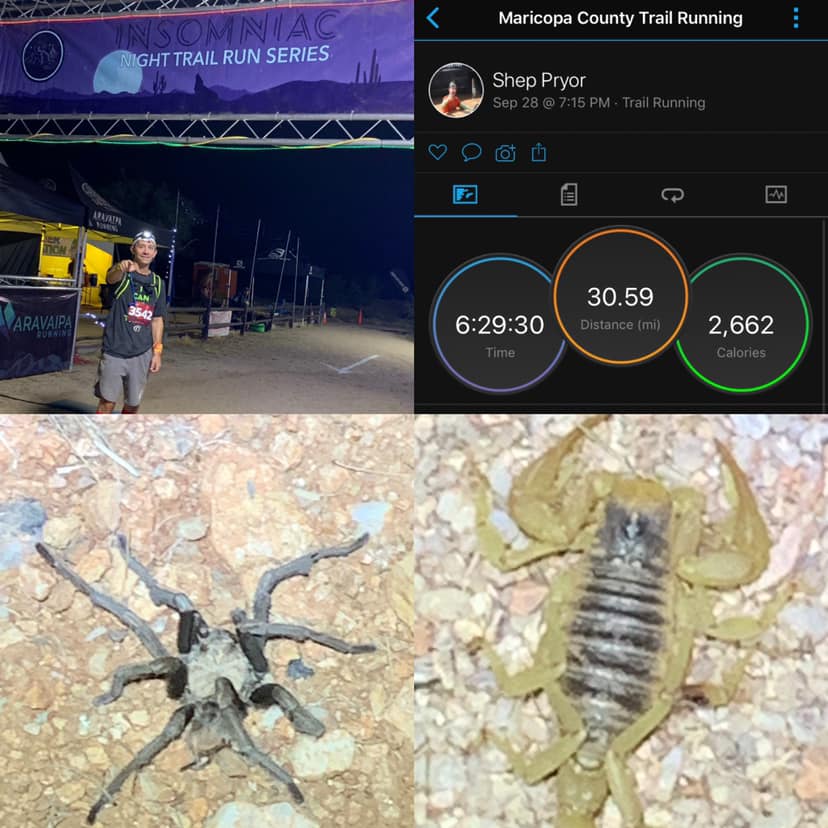
As weird as this will sound I used my very first 50K Ultra as a “training run” for the Lebec Spartan UltraBeast. That’s how serious I was about finishing the race. I almost ignored the reality of the night run being an Ultra event (almost) to keep my eyes on the prize 1 month later.
It provided me a couple of huge advantages:
1. Experience at night with very few if any distractions including music. Only my thoughts and my desire to quit working against me
2. Experience with a transition zone and the dangerous mentality of “The parking lot is so close what if I just quit now and call it a day?”
3. Experience with a race “bucket” of simply gear, nutrition, and refueling options for the turn around for the second lap of the race
4. The final knowledge that 30 miles is really, really far but once you reach it the mental block just disintegrates
After the Javelina Jangover 50K I took a week off and then ran a 10 mile loop the next weekend. And then I rested for a full 2 weeks leading into Lebec. Almost no running at all. Complete full “taper” or stop. I still worked out which I’ll discuss later but essentially my running halted. Plenty of people will disagree with that strategy but for me it worked. I wasn’t going to increase my AeBT any further at that point and more importantly what I learned mentally during the 50K was the critical element. So I rested and didn’t burn myself out too close to my true race goal.
By race day I was ready. Nervous as hell. But ready.
Strength Training:
If you’re Kevin Gillotti you train in your garage and post incessantly on Instagram. If you’re like most of us you free form it at home, at a Crossfit or an F45 and mix up HIIT training coupled with strength training. I don’t have access to a perfect OCR gym. That has to come from home, a Ninja gym I go to occasionally, showcase local races and a rock climbing gym I’m familiar with nearby.
But strength training is key for both the terrain and distance running as well as the proficiency with upper body grip based obstacles. I think something that most people don’t realize or appreciate is what helps endurance training weirdly includes:
1. Sprint training
2. Strength training
3. Deep core workouts
I would incorporate hill repeats in your interval training. I am now including sprint repeats as well or the so called 30/30 repeats (look it up as there are lots of ways to do this workout). And plenty of strength and core training to include lunges, squats, dead lifts etc. They help, they matter. Do them.
Obstacle proficiency and grip strength come in many ways but I recommend getting a pull up bar to place over a doorway and do a LOT of pullups. Arguably if you did just pull ups, pushups and air squats like a constant Murph challenge you’d be Ok. But a bar over the doorway allows for dead hangs for time, one handed grip repeats, and hand to hand grip adjustment training. If you have access to your local park or kids playground hit the monkey bars and the rings. If you’re me then you are completely ridiculous and this is what your backyard looks like:
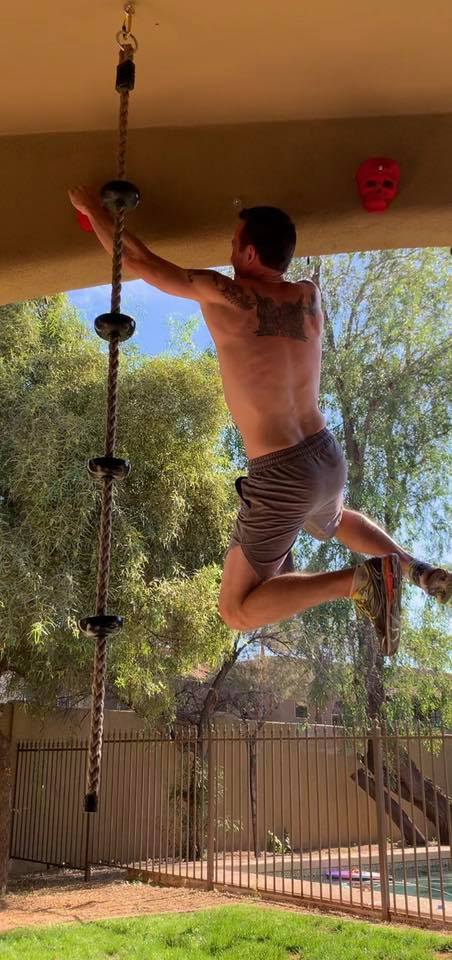
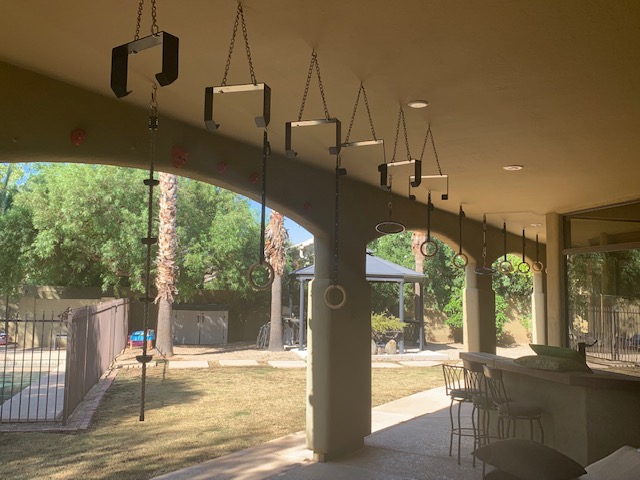
1. Rings, rope, ninja wheel run measures 48 feet separated on the ceiling studs 4 feet apart
2. Gibbons set up measured 6 Gibbons separated by 2 feet a piece
3. Rock climbing handholds across the archway measuring 12 feet
Along with my distance training I do this style of strength/HIIT training typically 4-5 times a week.
Make training fun and race day will be a damn treat and joy. I love training and that’s a key mindset. Mix it up. The very nature of OCR is that our training is extremely different from some athletes because it has to be. You know you’re an Obstacle Racing junky when the following conversation happens with zero questions asked:
Hey man guess what?
– What?
I got a hay bale and a 425# tire!
– You are my hero
Nutrition
Let me start this segment off by stating: What a Goodamn shit show this is. Literally and figuratively.
This was the segment of the training that NOONE has figured out. And I do mean NOONE. But the best piece of advice that almost everyone will deliver is use what you use in training for racing. Do NOT change the day of the race to “try something new out.” You might as well run with a cobra in your pants for all the good it will do. Well….the cobra might be motivating….. whatever ….. no cobras and no new food.
For the day of the race I won’t shit all over you, the reader, and tell you what I read 100’s of times…..”just use what works for you man, just trial and error bro, you’ll figure it out sista.” Because if I said that I’d want to punch myself in the dick and I’d deserve it. So here seem to be some guiding principles that worked for me but also pull from conventional wisdom.
Pre-Race: Wednesday before Saturday race day
1. Leading in you’ll want to hydrate and pre-up your electrolyte intake. I’d suggest a liter to 2 a day of water and electrolytes for a minimum of 3 days.
2. Ditch the shit food. Stay clean. Chicken, veggies, sweet potatoes, avocado, oatmeal etc.
3. I’m not a big carb load guy because I’m mostly pretty vegetarian but if you feel the need the night before perhaps wheat based pasta and starchy potato carbs like sweet potatoes. Don’t change things too much for too much carb based “loading” or you’ll just shit yourself race day morning.
Race day morning:
– I’m a big believer in keeping it simple. Steel cut oats, banana and honey, a spritz of coffee and keep the hydration going from the night before.
Race pack Lap 1:
1. My hydration bladder is 2 L for a 30 mile UltraBeast. Any more and it’s too heavy and for Age group and Elite athletes you have to carry your pack through all the obstacles and I don’t want to get weighed down or have a weight shift unexpectedly on say the Twister or Beater.
2. My bladder is full of water mostly, a Nuun electrolyte tab and an entire Tailwind package with no caffeine. Tailwind is the bomb.
2. I carry baby food. DON’T JUDGE ME YOU BASTARDS. That’s right. Baby food like these:

Incredibly easy to digest even while physically running, massive burst of potassium and electrolytes, super quick energy surge, and easy to toss in the nearest trash at the next water station.
3. I also bring gels like the cliff blocks and use honey stinger chews and trail mix with nuts and a bit of chocolate and I love those candied pineapple chunk things.
4. I take a chewable salt tab pictured here maybe two times a lap measuring 15 miles or so. I’m not a huge proponent of salt tab consumption in overblown proportions but they seem to help.
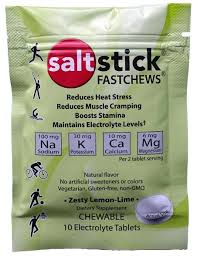
5. I have used mustard packets before and pickle juice. This one I can’t really say one way or the other how critical it is.
Transition bucket (pictured is a 2 gallon Home Depot bucket):
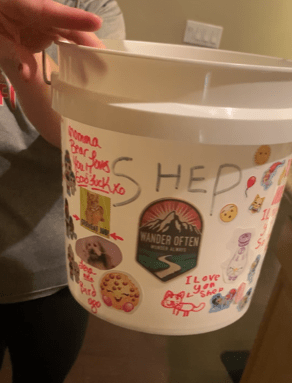
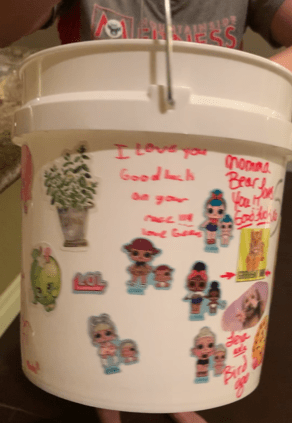
First point of order: Decorate your bucket. Do a fabulous job.
– But Shep it looks like a Goddamn 4 year old decorated that thing?
Joke’s on you. My kids are 9,7 and 5. And I’m 44 and decorated that thing. Suck it 4 year old’s everywhere.
Second point of order: size matters. At least that’s what the very pleasant clerk offered up to me when questioned. But to be fair he was a little creepy and reminded me of the dude in Silence of the Lambs that makes you put the lotion in the basket or it gets the hose again. But, I digress. I went with a 2 gallon because my kids decorated it with me at home and I had to check the damn thing through luggage at the airport. But a lot of people swear by a 5 gallon. I think it depends on whether or not you need or expect to need LOTS of gear options including a 2nd pair of backup trail shoes.
After 17 miles or so make 100% sure there is something in there for you that is EXCITING at transition. I’ve heard it all. Slice of pizza, sandwich, cookies, giant pickles, the heart of a water buffalo, eye of newt, souls of your enemies….whatever floats your boat. I went with the following:
1. I ate a PBJ/honey banana sammich and it was THE GREATEST MEAL IN HISTORY. Think I’m overstating it? Historically, this is what Caeser ate after crossing the Rubicon. I might be making that up. Not sure. But he has a salad named after him so at this point he’s legit on food recommendations.
2. I downed a baby squeezie and was sort of good to go.
3. I also took 2 chewable Pepto Bismols to settle my stomach. These were helpful.
I’ll mention gear here as well and discuss full gear later.
At transition I really just changed socks and race pack bladders. That was it. I didn’t bring extra shoes although a lot of people do. I pulled off my shoes, banged out the rocks, changed socks and that was it. I didn’t even bother changing shirts or tops.
Race Pack Lap 2:
New 2 Liter bladder full of water, Gatorade, Nuun tab and another full Tailwind pack with caffeine this time around. Swapped them out real quick. Re-added a few baby squeezies and my pack was ready to go. Carried also in my pocket some candied ginger to settle my stomach if I needed it.
Lap 2 I didn’t cramp, I felt ok mostly throughout, no weakness and no nausea. Maybe I was lucky. But I was standing up hiking the hills while Lap 1 only Beast racers were on their knees. I was shuttled to the front of obstacles and flew through them and just enjoyed the race. Talked and smiled. Chatted and laughed. And PAIRED up. Ultra racers start disappearing and becoming few and far between so I paired up with guys pacing similarly and that helped huge.
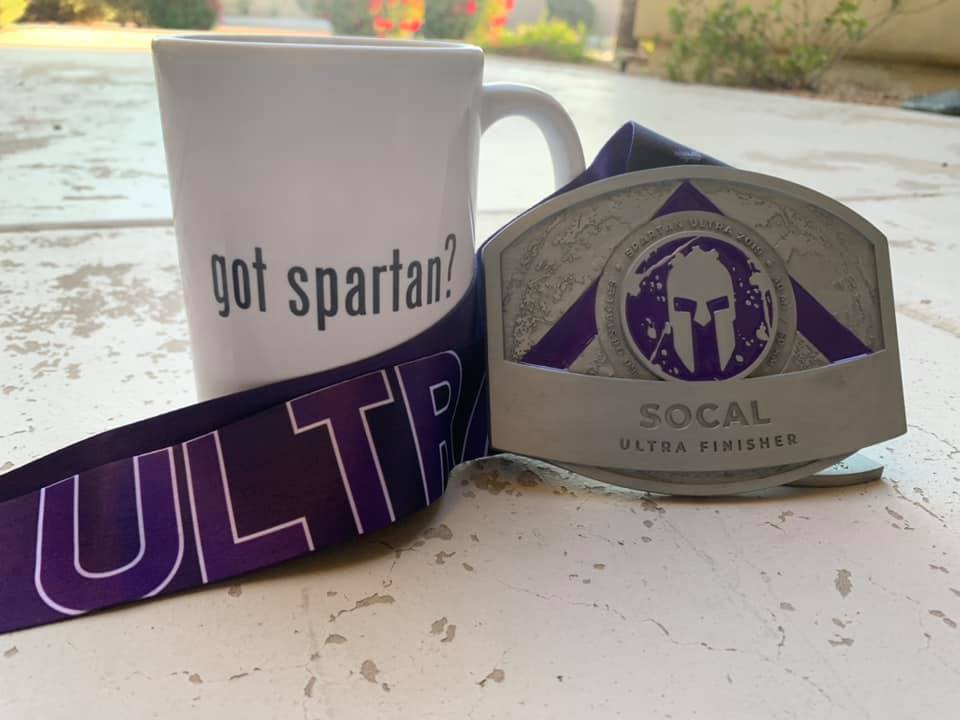
I crossed the finish line in 8 hours and 53 minutes leaving me in 9th place for my age group on my first Ultra. I felt fine but fatigued at the end. A little crampy. Got my fit aid and my Tshirt and medal and was elated.
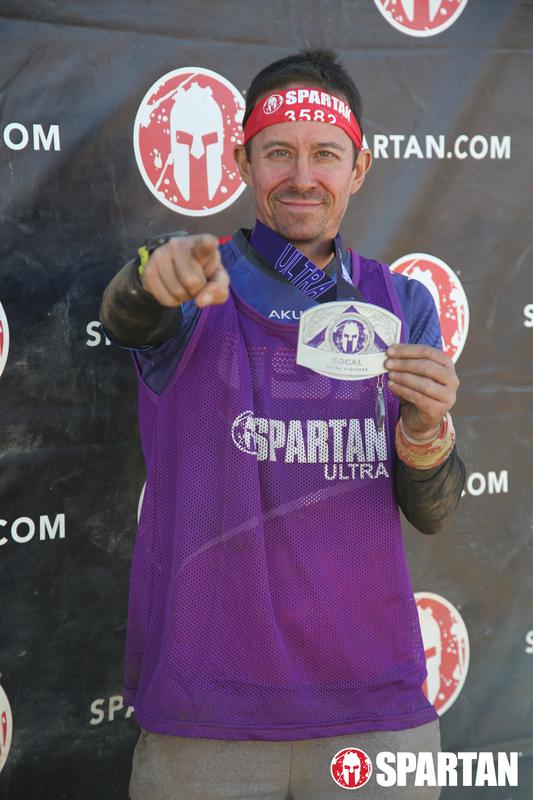
Gear: Wear what worked in Training!!
From Bottom up I wore –
1. Salomon Speed Cross 3 trail shoes
2. Wool socks that rise high above my shoe heel
3. Calf Compression sleeves
4. Light compression pants
5. Spandex briefs
6. Light shorts with zippable pockets for easy access nutrition
7. Light long sleeve compression
8. Race shirt
9. Pack
10. Spartan Head band and sunglasses
11. Trail watch
12. Head scarf option wrapped on my wrist in case of dust and debris
At transition I was pretty dry because it’s the California hills but my feet were a bit of a mess and like in most races the rocks in my shoes had acquired names, backstories, and rivals by this point. So I switched out my socks at transition and banged out the rocks in my shoes. But I didn’t don a new pair of shoes or change anything else. I put on some new body glide but that was the only additions besides re-gearing my pack and off I went. Some people get all crazy with a full on bucket/Walmart bin with an ENTIRELY new set of gear. You aren’t climbing Everest. Calm down. Do yourself a favor and focus. I’d argue shoes, socks and a new race shirt might be the most you’ll need extra in your bucket. If it gets hot out ditch the long sleeves. If it was raining or got cold then maybe grab the jacket or another layer….but that should be the most that you’ll need.
Final Takeaways:
Like in any race you finish with a few new pearls and a few new ideas of what you’d do differently to improve the overall performance or experience. I feel lucky that I don’t have too much to add.
1. Make sure you look up and enjoy the race venue site and trail. So often I don’t. I look down for 90% of it until I reach an obstacle. So look around once or twice. You’ll be happy.
2. 30 miles up 8000 feet of elevation with 62 obstacles makes for a long day. I was lucky to have a buddy be my support and photog guy at transition and at the end of the race. If that isn’t an option for you talk to other racers, engage the crowd and thank the volunteers as you go. And don’t forget to smile because it helps
3. Stay hydrated and eat early and often way before you think you need to. Weakness and cramping are bad but nausea and GI distress are race killers. Don’t fall victim to it. Pepto, Ginger chews/gums/gels, and easy to digest options will get you through the tough patches.
4. Don’t stress about your time or cutoffs. Right foot. Left foot. Relentless forward progress.
5. With that in mind don’t dally in Transition but take your time. This was a HUGE learning point from my night 50K. I was in and out of transition in that race too quickly. In Lebec, I took 15-18 minutes. Changed clothes, ate, stretched, repacked, went to the bathroom and was really, truly ready to get back out there. Maybe that’s too long and knocked me back a few spots but I don’t care.
6. The first 17 miles is half the race. The last 13 are a countdown to victory. Every mile marker is its own reward. You’re done with the Ultra lap and you can almost mentally coast to the finish line. Enjoy it. Don’t panic at difficult obstacles. Take your time. And best of all….enjoy the Celebrity vibe you get when the race volunteers yell…..
ULTRA COMING THROUGH!!!!!!!
*Thank you all so much for reading until the end!!
**I am a Scottsdale, Arizona based OCR addict/trail runner/surgeon/father/newUltraTribe Member. Please follow this blog and follow my journey on Instagram @drshepherdvfps for more insights and progress towards attempting to be better than yesterday.
 Shep: The SpiderMonkey Chronicles